George Burbank–Phil Burbank: Brotherly Partnership and Tension
The Power of the Dog (Thomas Savage Edition)George Burbank and Phil Burbank are brothers and business partners whose shared ranch depends on their complementary work, even as their relationship moves between familiar confidences and pointed conflict. George handles its accounts and dealings with the outside world; Phil oversees labor, equipment, and the practical demands of haying. Their partnership is functional and longstanding, but it does not make them alike: moments of ease sit beside moments when Phil knows exactly where to wound George.
Identity and Division of Work
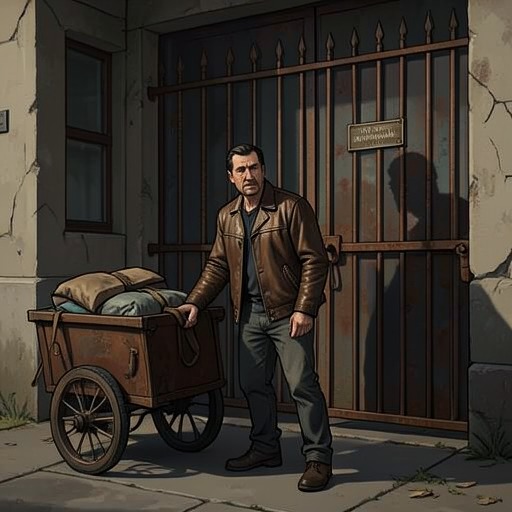
The brothers occupy distinct positions in the operation. George sits at the head of the table, keeps the books, negotiates with buyers, writes letters, answers the telephone, and maintains the Reo. Phil’s sphere is the working landscape: he supervises haying, inspects and repairs machinery, checks the tents and camp facilities, directs the diversion of creek water for irrigation, watches the hay’s growth, and sets the season’s start. This division gives each brother authority, but of different kinds. George manages the ranch’s transactions and communication; Phil coordinates the physical work that keeps its seasonal operation moving.
Phil’s responsibilities are concrete and extensive. In preparation for haying, he checks eight mowing machines—four John Deeres and four McCormack-Deerings—as well as buck rakes, sulky rakes, derricks, and the cook and dining shacks. He also has twelve large canvas tents unrolled and inspected for damage. Haying begins as soon as possible after U.S. Independence Day (July 4), and Phil treats that date as the threshold to a demanding ninety-day season. The account presents their partnership not as an abstract bond but as a working arrangement in which George’s business management and Phil’s operational oversight meet in the running of Burbank Ranch.
Familiarity and Confidences
The blacksmith shop offers a quieter view of their connection. Phil works at the forge, pumping the bellows and waiting for iron to heat, while George enters and sits on a sawhorse. Phil does not immediately speak. When George seems to need help getting started, however, Phil prompts him to talk. The gesture belongs to a familiar relationship: George can sit in silence, and Phil recognizes that he has something to say. Phil later takes pleasure in George’s small confessions, suggesting that these exchanges are not merely business consultations but a form of companionship between brothers.
Their conversations also show how their different roles do not prevent them from sharing judgments about the world beyond the ranch. In the early morning of 1917, when cattle buyers are trying to secure a low price, Phil advises George to wait. He has been reading closely and predicts that the professor from Princeton will bring the country into war, creating an opportunity for them to make money. The episode joins private conversation to partnership: Phil offers George his reading of national events as practical counsel for their shared business. His confidence is not simply a matter of superior knowledge; it is knowledge he chooses to put at his brother’s service.
Difference and Vulnerability
The brothers’ differences appear in their education as well as their work. Phil recalls a dean asking how two members of the same family could have such different academic outcomes: Phil earned an A, while George failed. He raises the comparison directly with his brother, calling attention to a disparity that could easily become a source of embarrassment. The passage makes their unequal school records part of their shared history, not a complete definition of either man. Phil, who reads widely and closely, can be both a practical adviser and the brother who brings an old distinction back into conversation.
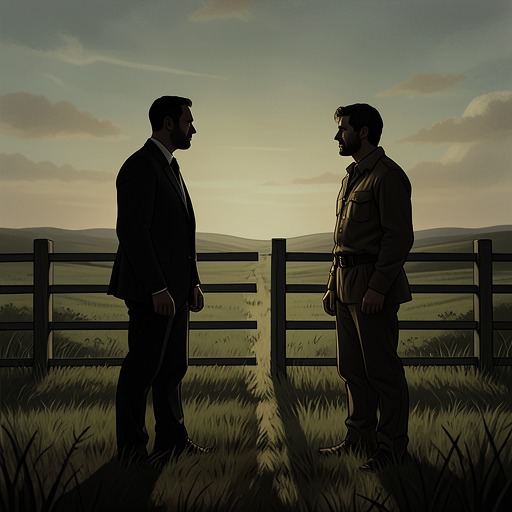
That mixture of intimacy and pressure becomes more severe in the barn. When Phil sees Indigenous people behind the ranch, he reacts angrily. George maintains that they will stay, then leaves. Phil knows how to touch George’s sore place and reopen an existing grievance. Their disagreement shows that the partnership does not amount to agreement on every matter, and that Phil’s familiarity with George can sharpen rather than soften conflict. The episode gives their closeness an uncomfortable dimension: Phil’s knowledge of his brother includes knowledge of how to unsettle him.
Shared Work and Contrasting Codes
Their working worlds also clarify a difference in how they regard physical labor and protection. Ranch hands and cowboys commonly wear horsehide gloves to guard against rope burns, splinters, cuts, and blisters. Phil rejects that protection, tolerates the effects of work on his hands, and scorns those who wear gloves. The other men order gloves from mail-order catalogues; some struggle over the written forms and turn to a literate coworker for help. Phil’s stance sets him apart from the workforce around him, while George’s administrative duties place him on the other side of ranch life: with books, buyers, correspondence, and the telephone. The contrast does not erase their interdependence. It shows the different kinds of competence through which each brother sustains the enterprise.
Haying binds those roles to the labor of the men they employ. The mowing crews work with machinery whose lowered cutter bars make the machines dangerous, and the operators sharpen those bars after work. Their skill and exposure to risk bring them extra pay and privileges, including newer tents, a hearing for their opinions, and first choice of meat. Against this seasonal organization, Phil’s task of preparing and directing the operation appears as managerial authority grounded in detailed oversight; George’s books and negotiations provide its business counterpart. Their relationship is therefore both personal and structural. The brothers’ easy exchanges and painful disagreements occur within a partnership that assigns each a distinct share of responsibility, and whose daily functioning requires those separate forms of work to hold together.